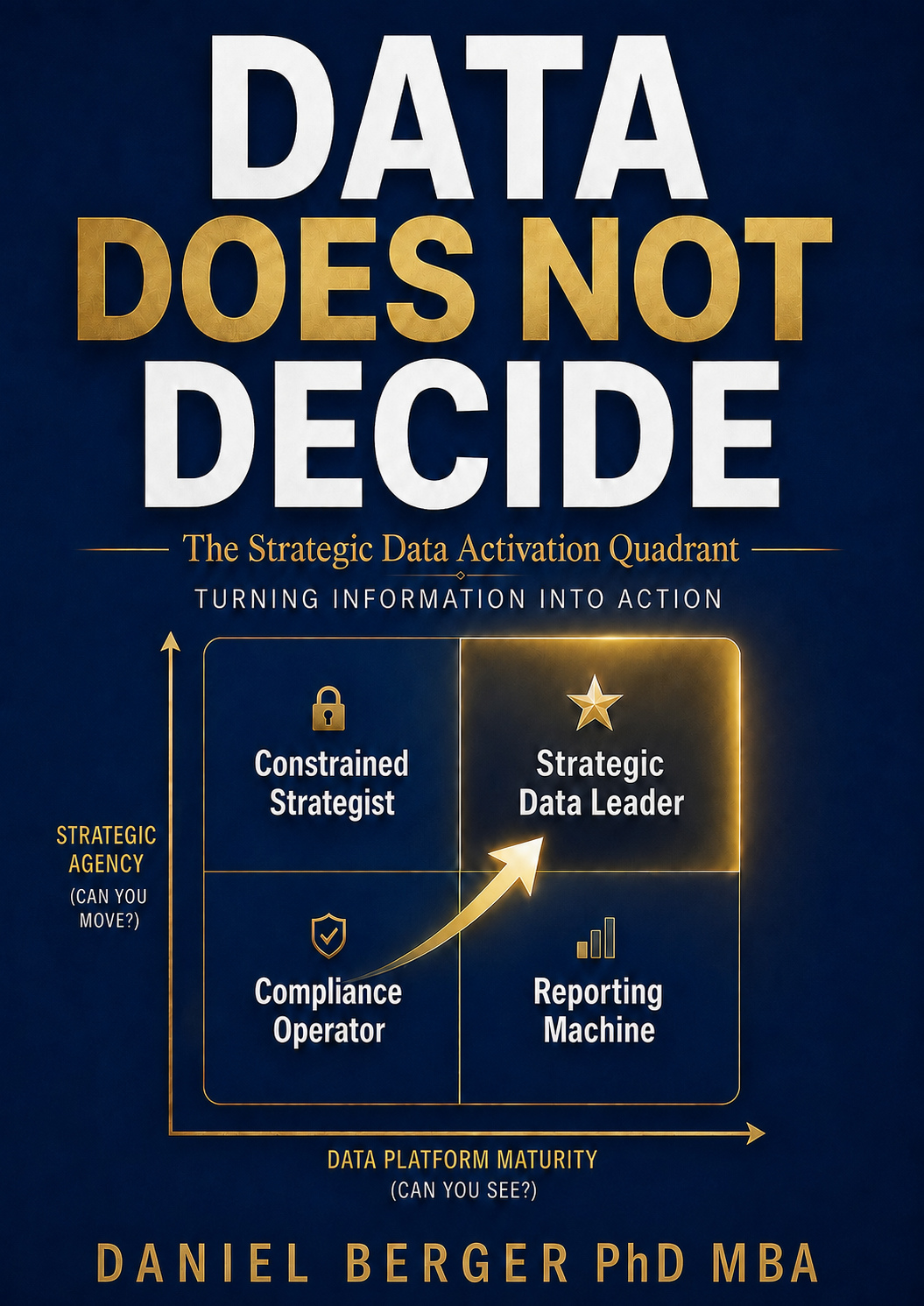
Data Does Not Decide
The Strategic Data Activation Quadrant
A practical framework for leaders who have more data, more dashboards and more AI, but still struggle to turn information into accountable action.
Data-rich. Decision-poor.
The problem is rarely the absence of information. It is the gap between information and authority.
Reports can be accurate and dashboards can be sophisticated while the organisation remains unable to act. Decisions stall when ownership is unclear, when thresholds have no consequence, and when accountability ends at reporting.
What will change because of this number?
If the room cannot answer, the number may be accurate, interesting and completely irrelevant to the decision.
Four patterns. Four different moves.
The Strategic Data Activation Quadrant maps organisations across data-platform maturity and strategic agency.
You kept the will. Now give it eyes by strengthening the data foundation.
Data, authority and action reinforce one another.
Reporting serves obligation more than organisational learning.
Strong infrastructure produces insight without sufficient movement.
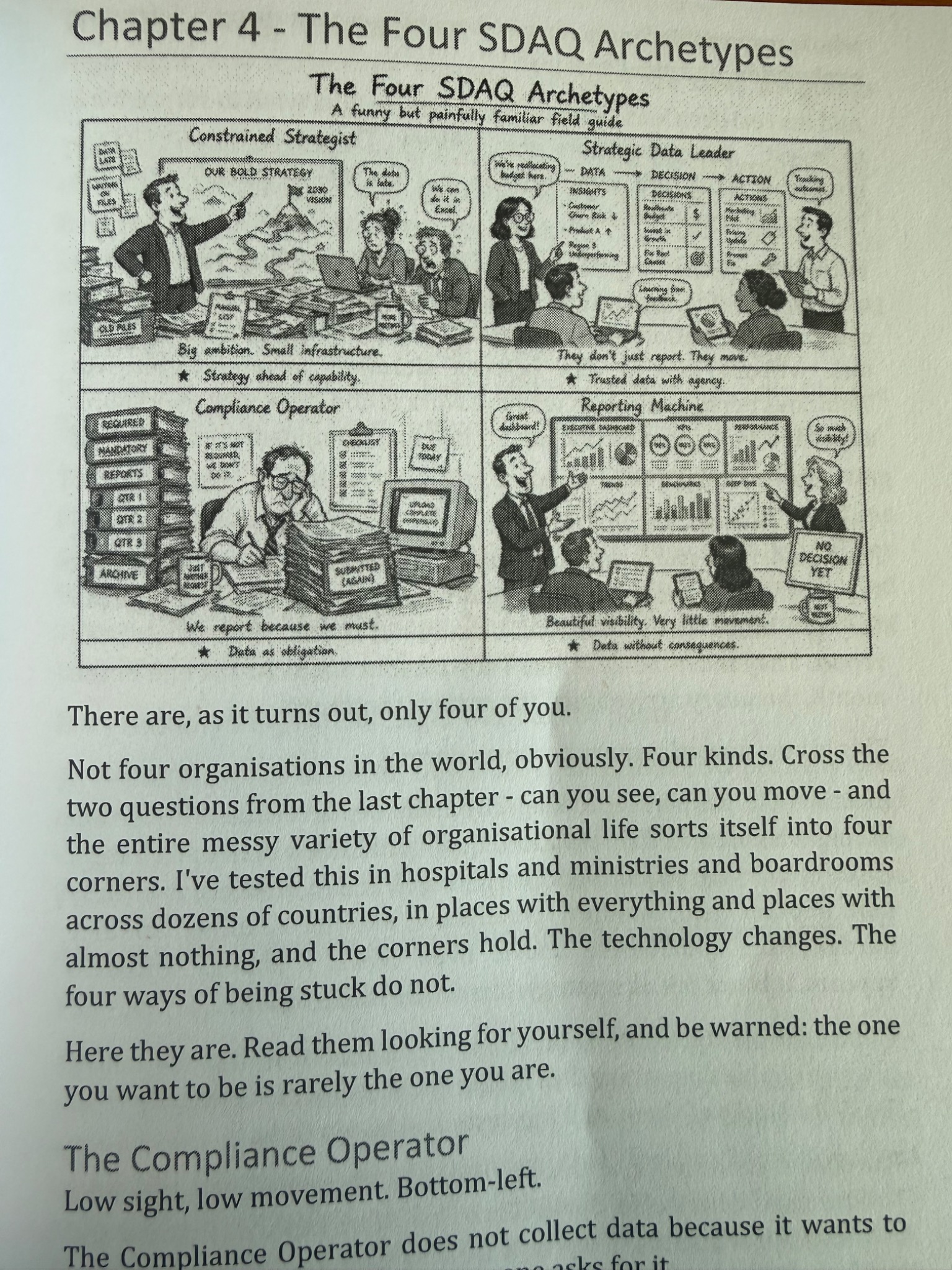
The Four SDAQ Archetypes
Two questions organise the mess: can you see? and can you move? The answers place an organisation into one of four familiar corners.
The point is not the label. It is knowing which move matters next.

Daniel Berger PhD MBA
Physicist, strategist, educator and founder of ThinkAlpha.
Over more than 22 years, Daniel has worked across healthcare, technology and international development in more than 100 countries. His work combines data strategy, decision intelligence, governance, systems thinking and human judgement.